


Semi-synthetic opiates (or opioids) are laboratory-modified substances that are referred to as "Hybrids of Nature and Science." They are created in a laboratory with natural opiates like morphine and codeine, and they are then enhanced and/or altered in their effects. Semi-synthetic opiates are considered highly addictive due to their effect on the brain receptors. Semi-synthetic opiates start with a naturally derived base from the poppy opium, then are structurally modified in a lab by human intervention. These drugs are primarily used to modify the effects of the natural opiates' pain relief and reduce side effects, while also serving as a better absorption.
Examples that may sound familiar consist of...
Heroin (Diacetylmorphine)
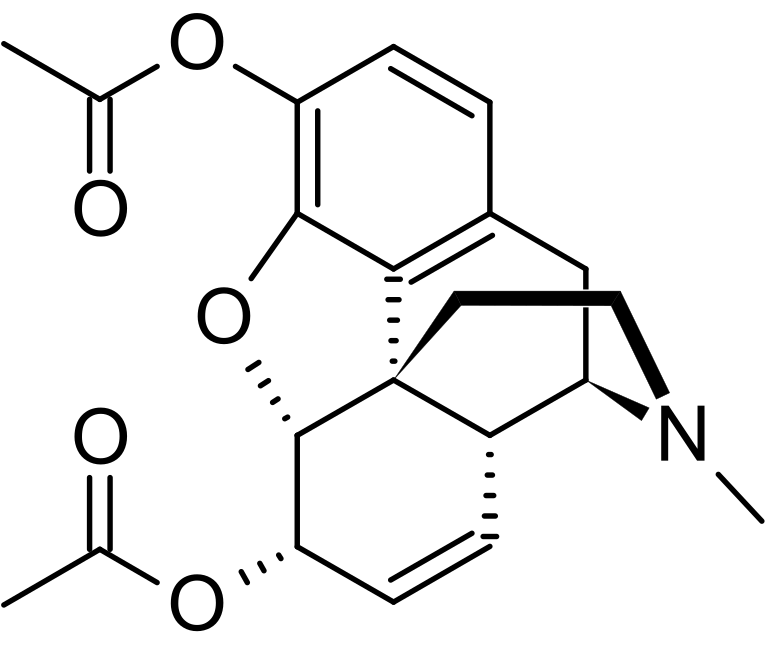
Heroin (Diacetylmorphine) is synthesized from the natural opiate morphine that is derived from the opium poppy. Heroin is known for its high potency and rapid onset in the brain. Because it crosses the blood-brain barrier within 1.5 minutes, it is primarily used illicitly and it widely considered one of the most additive substances in this class.
Oxycodone (OxyContin)

Oxycodone (OxyContin) is a semi-synthetic opioid derived from thebaine that is used to manage moderate to severe long-term pain. It is often formulated in time-release tablets to provide a steady stream of medication, though it can also be found in immediate-release versions for acute pain.
Hydrocodone (Vicodin)

Hydrocodone (Vicodin) is a semi-synthetic opioid that is also derived from codeine. It is typically prescribed to treat moderate to severe pain and is most commonly combined with acetaminophen. Hydrocodone works by binding to opioid receptors in the brain and the spinal cord, which reduces the perception of pain while simultaneously creating a feeling of relaxation and euphoria. Because of all of these effect, it has a high potential for dependence and misuse, especially when it is taken in larger doses or for long periods of time.
Hydromorphone (Dilaudid)

Hydromorphone (Dilaudid) is a powerful semi-synthetic opioid synthesized from morphine. It is significantly more potent than morphine and is commonly used in medical settings to manage severe pain, especially after surgery or for cancer patients. Hydromorphone acts quickly on the central nervous system and can produce intense pain relief and sedation. Due to its potency and rapid effects, it carries a high risk of addiction, overdose, and respiratory depression when misused.
Rofofsky, David. “What Are Semisynthetic Opioids?” Muse Treatment, 17 Dec. 2025, musetreatment.com/blog/what-are-semisynthetic-opioids/.
“Commonly Used Terms.” Centers for Disease Control and Prevention, Centers for Disease Control and Prevention, www.cdc.gov/overdose-prevention/glossary/index.html#:~:text=Prescription%20opioids%20%E2%80%93%20Medications%20used%20to,%2C%20hydromorphone%2C%20and%20oxymorphone;%20and. Accessed 4 May 2026.
“Heroin DrugFacts.” National Institute on Drug Abuse, U.S. Department of Health and Human Services, https://nida.nih.gov/publications/drugfacts/heroin. Accessed 8 May 2026.
“Oxycodone.” MedlinePlus, U.S. National Library of Medicine, https://medlineplus.gov/druginfo/meds/a682132.html. Accessed 8 May 2026.
“Hydrocodone Combination Products.” MedlinePlus, U.S. National Library of Medicine, https://medlineplus.gov/druginfo/meds/a601006.html. Accessed 8 May 2026.
“Hydromorphone.” MedlinePlus, U.S. National Library of Medicine, https://medlineplus.gov/druginfo/meds/a682013.html. Accessed 8 May 2026.